
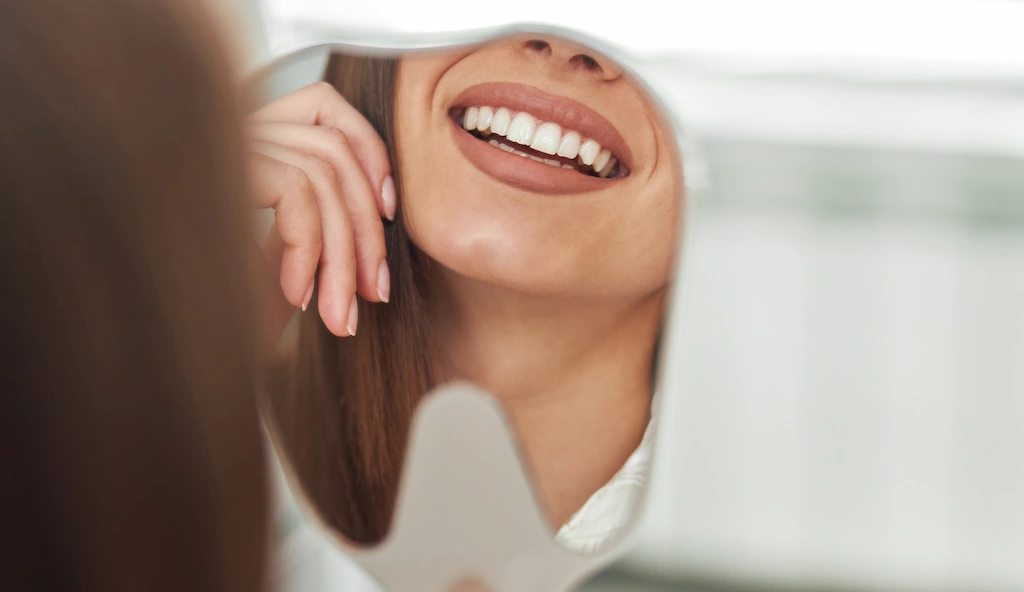
Achieving a radiant smile from the comfort of your home is one of the most common aesthetic goals today. However, the main question users always ask is the same: How long should at-home teeth whitening be left on?
Factors That Determine How Long to Leave Whitening Gel On
Not all gels are the same or have the same strength. The key factor is the active ingredient—typically Hydrogen Peroxide or Carbamide Peroxide. To understand how long to leave at-home teeth whitening on, we must consider three critical variables:
- Product concentration: The higher the peroxide percentage, the shorter the exposure time required. A high-strength gel may require only minutes, while a low-concentration gel may need hours.
- Pre-existing tooth sensitivity: If your teeth are sensitive to cold or heat, your dentist may recommend shorter sessions or alternating days to avoid discomfort.
- Tray quality: Custom-made trays ensure the gel is distributed evenly, optimizing whitening time compared to over-the-counter kits.
How Long Should Whitening Be Left On, Based on the Compound?
Dental chemistry dictates the treatment pace. As dentists in Málaga, it’s essential not to exceed the dentist’s instructions in order to protect your enamel.
Using Carbamide Peroxide (Nighttime Treatments)
This compound releases more slowly and steadily, making it ideal for extended periods without causing sharp sensitivity spikes.
- Recommended time: Between 4 and 8 hours.
- Best time: While sleeping, since lower saliva production prevents the product from diluting too quickly.
Using Hydrogen Peroxide (Daytime Treatments)
This is the most powerful and fast-acting agent. Its effect is immediate, so the contact time must be closely monitored.
- Recommended time: 30 to 90 minutes per day.
- Advantage: Perfect for those who can’t tolerate wearing trays overnight or prefer quick daytime sessions.
Side Effects of Exceeding Recommended Whitening Time
There’s a common misconception that leaving the gel on longer speeds up results. In reality, the tooth reaches a “saturation point”; once it’s reached, the gel stops whitening and starts dehydrating the tooth.
Exceeding the recommended whitening time can lead to:
- Dentin hypersensitivity: Sharp, temporary pain when exposed to cold air or hot drinks.
- Gum irritation: If gel overflows and touches soft tissue for hours, it may cause mild chemical burns or temporary white gums.
- Enamel surface alteration: While the process is safe, overuse can increase tooth porosity unnecessarily.
Expert tip: If you feel a “zing” or intense discomfort during the process, remove the trays, rinse with lukewarm water, and contact your dentist.
How to Know If Whitening Is Working Properly
At-home whitening is progressive and requires consistency. It’s not an instant change, but a gradual shift in shade day by day. To objectively track your results, keep the following in mind:
- Color evolution: Changes usually become visible after the third or fourth day of consistent use.
- Evenness: It’s normal for canines to whiten more slowly than central incisors due to their thicker dentin layer.
- Duration: A complete cycle usually lasts 10 to 15 days. If you see no results after this period, the stains may be intrinsic and require a different aesthetic treatment.
Protocol to Maximize Whitening Effectiveness at Home
To ensure your time is well spent, proper preparation is key. Follow these steps for successful at-home whitening:
- 1. Deep cleaning: Brush and floss before inserting trays. The gel must act directly on clean teeth, not on food debris or plaque.
- 2. Dry your teeth: Before inserting the tray, dry your teeth with a clean gauze. Excess moisture may dilute the whitening gel.
- 3. Follow a “white diet”: Avoid highly pigmented foods like coffee, red wine, tea, curry, or berries during treatment days. This prevents new stains from absorbing into the tooth’s open pores.
- 4. Avoid tobacco: Tar and nicotine not only stain but also interfere with the peroxide’s chemical process.
Is Professionally Supervised Whitening Preferable?
While drugstore kits are accessible, they lack the precision fit of a custom tray. At specialized clinics like Crooke Laguna, a prior diagnosis is performed to rule out cavities or gum disease that could worsen with whitening.
Professional supervision ensures that the time you leave whitening gel on at home is the minimum needed to achieve maximum results, always protecting your long-term oral health.