Periodontitis is a serious dental disease that affects the gums and the tissues supporting the teeth. If not properly treated, it can lead to tooth loss and more serious complications. Fortunately, advances in dental technology have made it possible to use lasers to treat this condition more efficiently and less invasively. In this article, as dentists in Málaga, we will explore how laser curettage can be an effective solution for treating periodontitis, its benefits, and we’ll answer the most common questions about this treatment.
[toc]
What is Laser Curettage and Why is It Important?
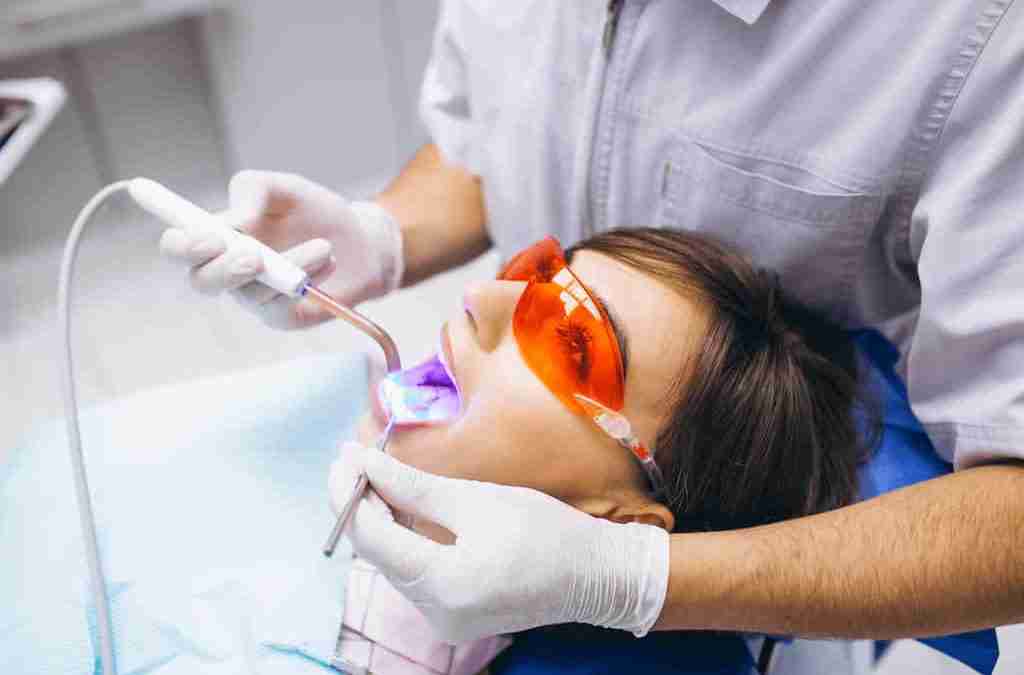
Laser curettage is a modern technique that uses laser energy to clean periodontal pockets and eliminate infection caused by periodontitis. Unlike traditional scaling and root planing methods, the laser allows for a more precise and less invasive treatment, with the ability to disinfect more effectively.
Benefits of Laser Curettage
- Precision: The laser acts precisely, meaning it causes less damage to healthy tissues and focuses on eliminating bacteria and infected areas.
- Less pain: Being less invasive, patients usually experience less postoperative pain.
- Faster recovery: Laser treatment promotes faster healing due to minimal tissue disruption.
- Less bleeding: The laser coagulates blood vessels while cutting, significantly reducing bleeding during the procedure.
What’s the Difference Between Scaling and Curettage?
It’s common to confuse scaling and curettage, as both procedures are used to treat periodontitis. However, there are key differences between them:
- Scaling: This procedure involves the use of manual or ultrasonic instruments to remove plaque and tartar from the root surfaces of the teeth and periodontal pockets. The goal is to smooth the root surfaces and remove debris that could cause infections.
- Curettage: Unlike scaling, curettage refers to the removal of inflamed and infected gum tissue from around the teeth. It is used when scaling alone is not enough to treat the infection.
In the case of laser curettage, laser technology is used to perform this procedure more efficiently, reducing damage to surrounding tissues and improving bacterial removal accuracy.
What is Laser Curettage?
Laser curettage is a less invasive procedure that combines infection removal and periodontal pocket cleaning with the precision and effectiveness of laser technology. During treatment, the laser penetrates the periodontal pockets, destroying the bacteria causing the infection and accurately removing inflamed tissue. Additionally, the laser helps stimulate gum regeneration, promoting faster healing.
Advantages of Laser Curettage
- Precise infection removal: The laser allows for more accurate bacterial elimination, minimizing the risk of infection spreading.
- Less tissue damage: The laser is less invasive than traditional methods, reducing damage to the gums and other oral structures.
- Lower risk of complications: Being a more controlled treatment, the laser reduces the risk of side effects and complications, such as excessive bleeding.
Is Laser Treatment for Periodontitis Painful?
One of the major advantages, especially for us as a dental clinic in Málaga, of laser curettage is that it is generally less painful than traditional treatments. Because the laser coagulates blood vessels as it works, there is less bleeding, which contributes to less pain during and after the procedure.
Although each patient may have a different experience, many report minimal discomfort and a much quicker recovery. After the procedure, some swelling or sensitivity may occur, but these effects are usually temporary and subside quickly.
Who Are Good Candidates for Laser Curettage?
Laser curettage is primarily recommended for patients with mild to moderate periodontitis who are looking for a less invasive alternative to traditional scaling. It is ideal for individuals with:
- Deep periodontal pockets
- Bleeding or inflamed gums
- Tooth sensitivity when cleaning affected areas
- A history of poor response to traditional treatments
However, each case must be evaluated individually by a specialist. In more advanced situations, surgical intervention may be required. Other factors are also considered, such as the patient’s general health, control of systemic diseases (like diabetes), and habits such as smoking.
Conclusion
Laser curettage represents an advanced and effective option for treating periodontitis. It offers greater precision, reduced invasiveness, and faster recovery times. If you suffer from this condition, it’s best to consult a periodontics specialist to determine whether this treatment is right for you.
Frequently Asked Questions About Laser Curettage
How long does a laser curettage session last?
A session usually lasts between 30 and 60 minutes, depending on the number of teeth affected and the depth of the periodontal pockets.
Is more than one treatment necessary?
In some cases, yes. The specialist may recommend multiple sessions if the periodontitis is widespread or if the condition doesn’t fully improve after a single session.
Does laser curettage completely replace traditional methods?
Not always. Although it’s an excellent alternative, in severe cases it may need to be combined with more in-depth techniques to ensure complete cleaning.
What post-treatment care should I follow?
Avoid brushing aggressively during the first 24 hours, maintain good oral hygiene, avoid smoking, and follow your dentist’s instructions regarding rinsing and prescribed medication.
Are there any contraindications for laser curettage?
Laser treatment is generally safe, but it may not be recommended for patients with pacemakers, pregnant women, or those with certain autoimmune conditions. A prior evaluation is always necessary.